I woke up at 3:00 AM, shivering uncontrollably, completely soaked, and covered in mosquito bites that felt like they were on fire. I was somewhere in the deep jungles of Northern Vietnam, and my "cheap" beach hammock had just failed me spectacularly.
The nylon had stretched under my weight, dropping me directly onto the wet forest floor. The thin fabric offered zero insulation against the sudden drop in temperature, and the lack of a proper mosquito net meant I was an all-you-can-eat buffet for the local insect population.
I spent the next four hours sitting against a tree in the pitch black, waiting for sunrise and cursing the travel influencers who made hammock camping look so effortless.
If you want to survive the jungle, ditch the $15 beach hammocks. Here is the unfiltered, brutal truth about what it actually takes to sleep in the wild without a tent—and the gear you absolutely must carry.
The Cinematic Struggle: The Instagram Lie
You've seen the photos: a carefree backpacker reading a book in a brightly colored parachute hammock strung between two palm trees on a pristine beach.
Here is the truth: Those hammocks are toys.
If you take one of those into a real jungle, a deep forest, or anywhere that isn't a manicured resort, you are going to suffer.
- The Banana Problem: Cheap hammocks force you into a "banana" shape. After four hours, your spine will scream in agony, and your knees will lock up.
- The Bug Invasion: In the jungle, mosquitoes bite straight through thin nylon. Without a 360-degree integrated bug net, you will be devoured alive.
- The Rain Reality: Tropical downpours don't care about your aesthetic setup. If you don't have a massive, waterproof rain fly, you will wake up drowning.
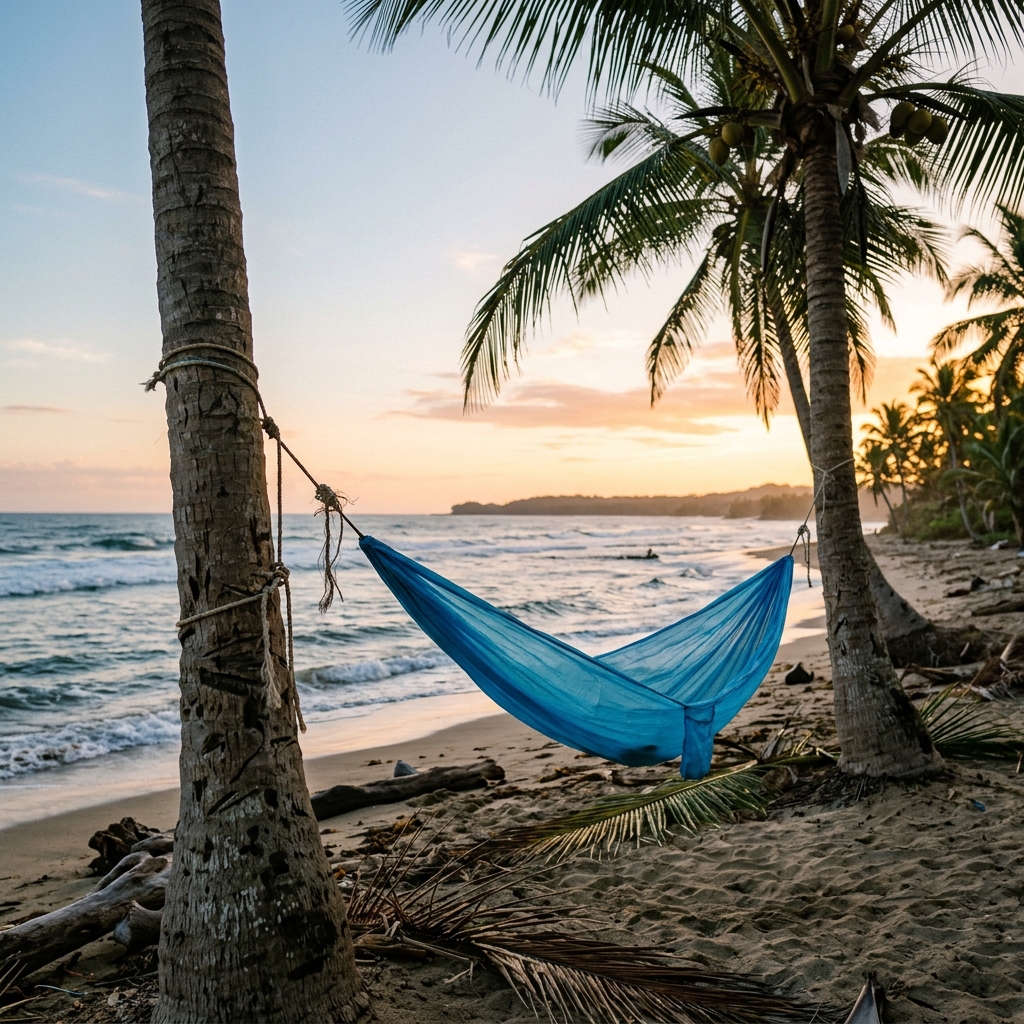 This is a toy. It is fine for taking a 20-minute nap at the beach. It is a death trap if you actually need to survive the night in the wild.
Enter the Tactical Jungle Setup
If you want to ditch the bulky, heavy tent and embrace the freedom of sleeping suspended above the uneven, rocky, bug-infested ground, you need a serious tactical setup.
Step 1: The Asymetric Lay
You don't sleep straight in a proper hammock; you sleep on a diagonal (asymmetric). This allows your body to lay completely flat. This requires a hammock that is at least 10 feet long and properly engineered.
Step 2: The Integrated Bug Net
You cannot buy a net separately and drape it over you. It will fail. You need a hammock with a heavy-duty, zipper-integrated No-See-Um mosquito net that seals you completely away from the outside world.
Step 3: The Rain Fly (Tarp)
Your tarp needs to be massive. It needs to extend at least two feet past the ends of your hammock. When the monsoon hits, you tie it low and tight, creating an impenetrable fortress against the wind and rain.
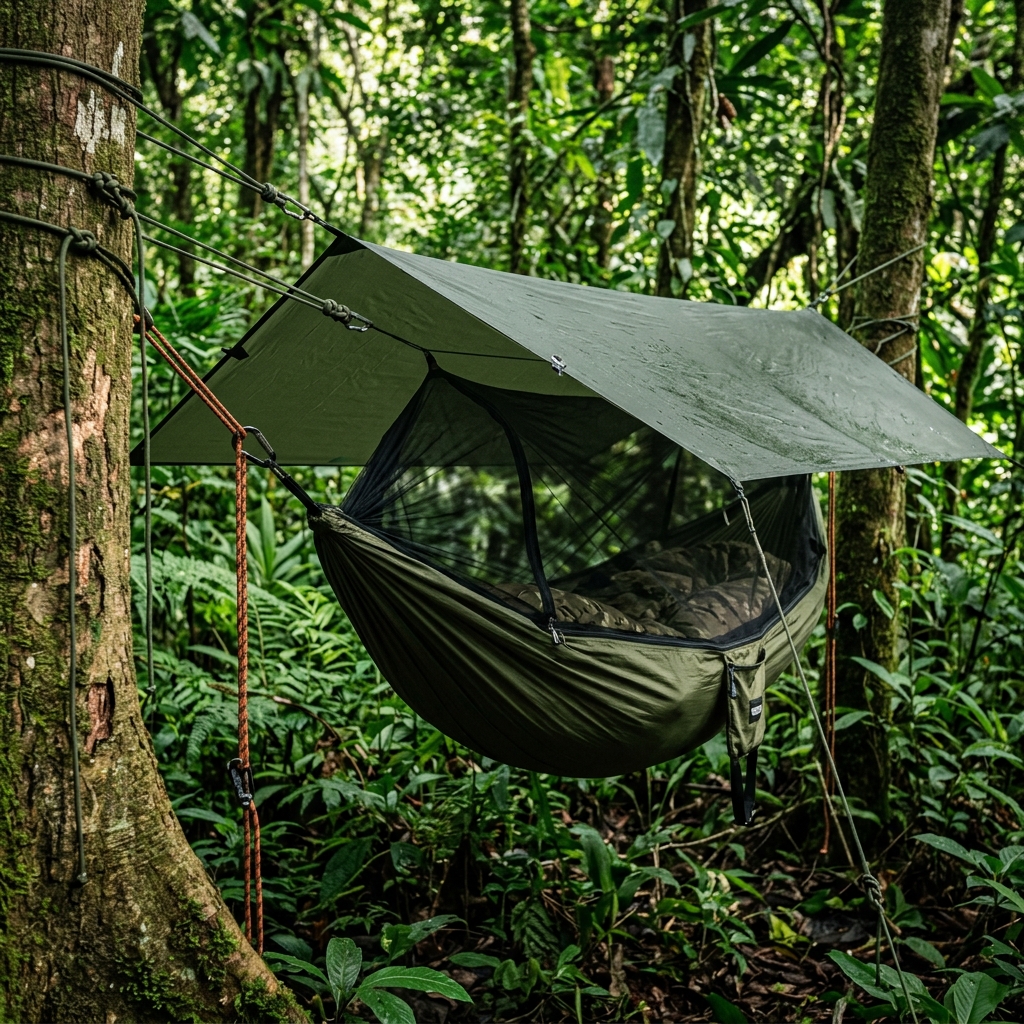 A proper tactical setup. The integrated net keeps the bugs out, the heavy-duty suspension prevents sagging, and the massive rain fly ensures you stay bone dry.
Upgrade to a Professional Setup
Stop suffering through cold, wet nights. Grab a military-grade tactical hammock with an integrated bug net and oversized rain fly.
Check Current Price (Up to 30% OFF)*Includes heavy-duty suspension straps.
The Cold Hard Reality: Insulation
This is the number one reason people fail at hammock camping.
When you sleep in a hammock, the air flowing underneath you pulls away your body heat (convection). Even in a tropical jungle, when the sun goes down, the temperature drops, and you will freeze. A sleeping bag is useless because your body weight crushes the insulation underneath you.
The Solution: You need an Underquilt. An underquilt hangs outside the hammock, trapping a layer of warm air beneath you without being crushed by your body weight. If you are on a brutal budget, a closed-cell foam pad inside the hammock can work, but it will slide around and annoy you.
Final Verdict: Is It Worth the Hassle?
Hammock camping has a steep learning curve. The first few nights, you will likely struggle to find the right angle, tension the tarp properly, and stay warm.
But once you dial in the system? It is the greatest travel hack in existence.
You never have to find flat ground again. You don't care about rocks, roots, mud, or standing water. As long as you have two trees (or a jeep roll cage and a fence post), you have a perfectly flat, incredibly comfortable bed. It cuts your base weight in half compared to a tent, and it grants you the ultimate freedom to camp literally anywhere.
Don't let the Instagram lies fool you. Buy the right gear, learn the system, and reclaim the wild.