I spent my entire third day in Delhi locked in a windowless hotel bathroom, clutching my stomach in agony. I had broken the cardinal rule of street food survival, and I was paying the price. I had eaten a pre-cut slice of mango from a cart that looked completely deserted.
By day five, I was terrified to eat anything that hadn't been boiled in a sterile kitchen or wrapped in plastic. I was losing weight, losing energy, and losing the entire point of traveling to India in the first place.
If you travel across Asia or South America and only eat at tourist-trap restaurants with English menus, you aren't really traveling. You are just taking an expensive vacation in a bubble. The soul of a country is in its street food.
But how do you eat the $1 skewers of meat, the bowls of steaming noodles, and the exotic fruits without spending half your trip violently ill?
Here is the brutal, unfiltered guide to developing an iron stomach and safely dominating the chaotic street food markets of the world.
The Cinematic Struggle: The Fear of the Unknown
Westerners are conditioned to fear anything that doesn't come from a sanitized, stainless-steel kitchen with a certified health grade on the window.
When you walk into a sprawling night market in Bangkok or Marrakech, your senses are assaulted. It's loud, it's smoky, and it looks completely chaotic. You see meat hanging in the open air, vendors washing dishes in plastic tubs on the sidewalk, and stray dogs wandering between the tables.
It is terrifying. But that chaos is an illusion.
Behind that grime is a highly efficient ecosystem that feeds millions of people safely every single day. You just have to learn how to read the signs. If you let fear control your diet, you will miss out on the greatest culinary experiences of your life.
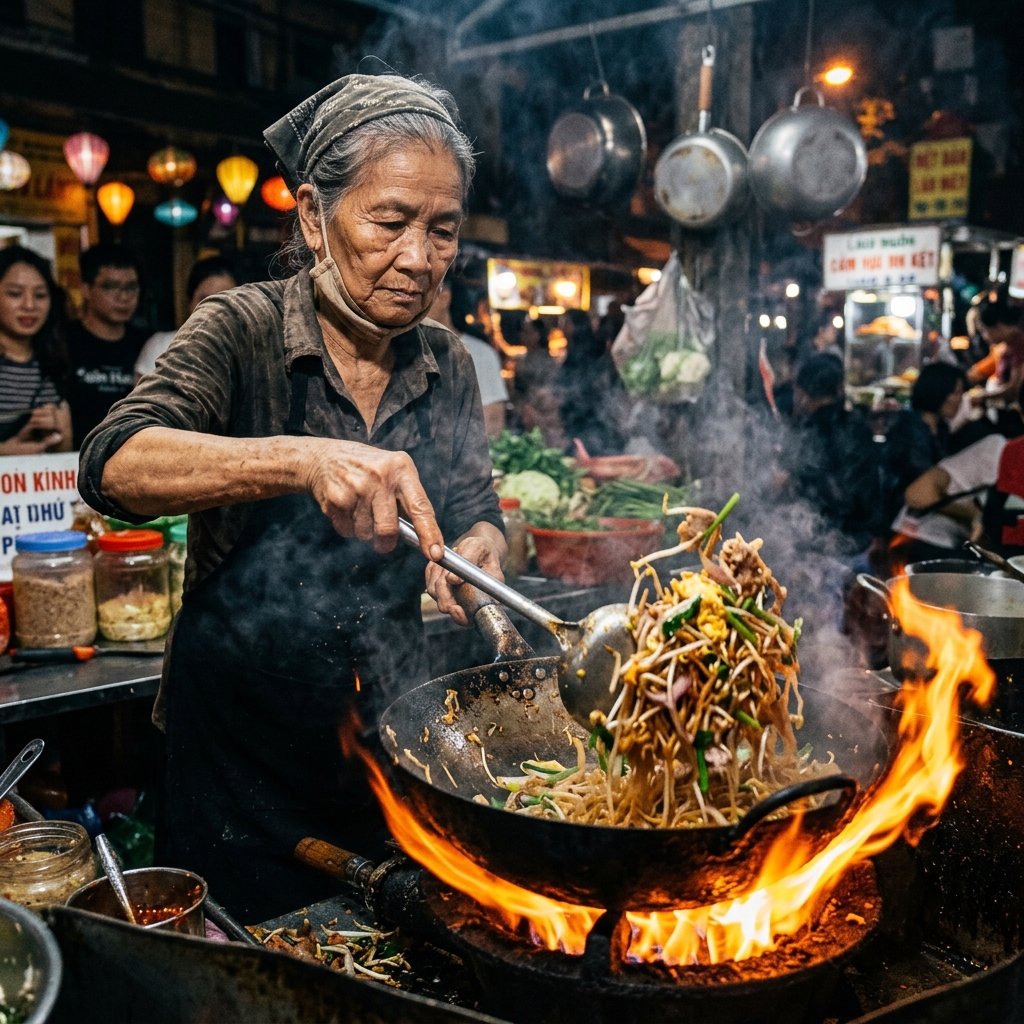 The grime is aesthetic; the heat is the sanitizer. Learn the difference between a dirty street and a dangerous kitchen.
Rule #1: The Queue is Your Lifeline
This is the only rule that truly matters: Never eat at an empty stall.
If a vendor has no line, there is a reason. Either the food is terrible, or worse, the ingredients have been sitting in the sweltering heat all afternoon breeding bacteria.
Look for the stalls with a massive queue of locals. High turnover is your absolute best defense against food poisoning. If a vendor is constantly cooking fresh batches to keep up with demand, the food is safe. Follow the locals. If there is a line of taxi drivers and grandmothers waiting for soup, get in that line.
Rule #2: Fire is the Great Purifier
If you are a beginner, stick to food that is cooked directly in front of you.
Do not eat room-temperature buffets. Do not eat pre-cut fruit (they often wash the knives in untreated tap water). Do not eat salads (washed in tap water).
You want to see fire. You want to see the vendor throw the ingredients into a screaming hot wok or onto a roaring charcoal grill. Boiling soup that is constantly bubbling is also incredibly safe. The intense heat kills the pathogens that your foreign stomach cannot handle.
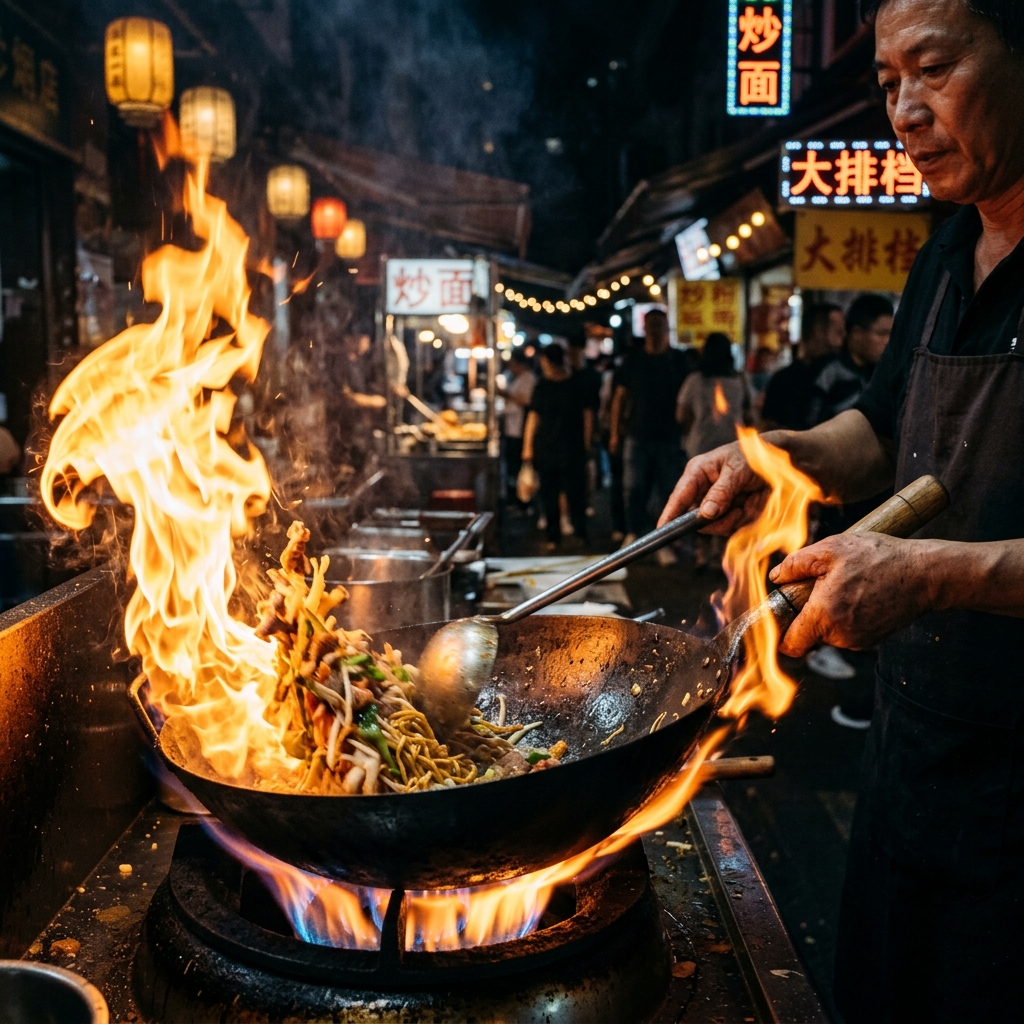 If the food is handed to you blisteringly hot, it is safe to eat. Fire is the ultimate equalizer.
Never Let Food Poisoning Ruin a Trip
Even with the best precautions, accidents happen. Arm yourself with a medical-grade traveler's diarrhea survival kit.
Check Current Price (Sale)*Includes rehydration salts and activated charcoal.
Rule #3: The Ice Myth
Every travel blog tells you to avoid ice in developing countries. This is outdated advice.
In almost all major cities in Southeast Asia and South America, the ice used in drinks is produced in massive, commercial factories using purified water. You can spot factory ice immediately: it has a distinct cylindrical shape with a hole in the middle.
If you are dying of heatstroke in Vietnam, drink the iced coffee. Just avoid crushed ice or blocks of ice that the vendor is hacking apart with a machete on the sidewalk.
Final Verdict: Embrace the Chaos
Getting sick on the road is a rite of passage. It will happen eventually.
But if you follow the rules—eat where the locals eat, insist on blistering heat, and avoid raw vegetables—you can drastically reduce the risk.
Do not let one bad experience scare you back into the air-conditioned restaurants. The street is where the culture breathes. It is where you find a $2 meal that rivals Michelin-star dining. Pull up a tiny plastic stool, point at what the guy next to you is eating, and dive in.